 2025-10-21
In the real estate sector—whether you're a developer, investor, or buyer—location selection is never just “a dot on the map.” It’s a strategic decision that requires not only assessing the current state but also calculating the future development potential and risks of the area. When the choice is made with an understanding of how the location might evolve over time, the decision becomes purposeful and well-founded, rather than impulsive or superficial.
Across global real estate markets, a recurring pattern often emerges: areas long considered secondary or overlooked later transform into high-value investment hubs. Williamsburg in New York and Shoreditch in London are vivid examples. Both have undergone similar transitions—from marginal zones to cultural and technological centers—where property values rose not only due to construction but also due to shifts in perception. These changes led to territorial capitalization, where not just the property but the entire environment begins to generate added value.
Turning to the Armenian market, a similar transformation has been observed in Davtashen. Long viewed as a peripheral and relatively passive district of Yerevan, it has significantly evolved in recent years. Infrastructure improvements, the construction of new residential complexes, and the activation of community life have contributed to the area’s revaluation. Today, Davtashen not only enjoys growing demand but is also shaping a new urban lifestyle—becoming a capitalizing zone where investments may not yield long-term value.
To conduct a more grounded and in-depth analysis, it’s essential to examine the full picture of quantitative and price indicators in the real estate market over recent years. The graph below reflects the dynamics of real estate purchase transactions in Davtashen administrative district from 2017 to 2024, based on cadastral data.
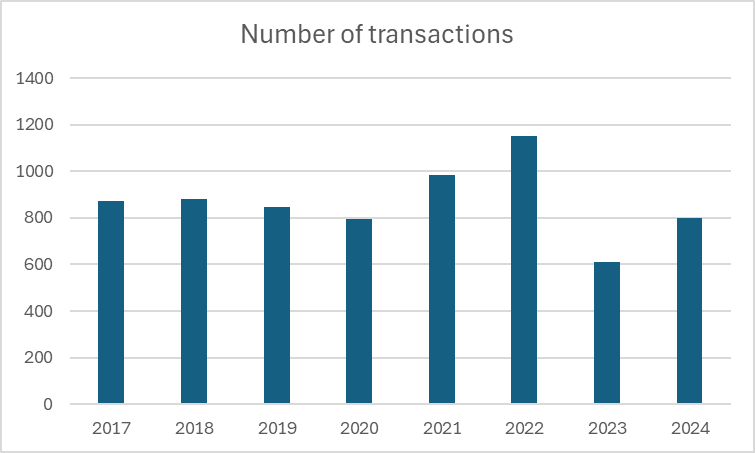
Although 612 real estate transactions were officially registered in Davtashen in 2023, that figure doesn’t provide the full picture. According to our analysis, an additional 400–450 transactions were conducted through purchase rights that weren’t included in official statistics. Thus, the actual number of transactions may significantly exceed the official data—approaching the 1000 mark.
In 2024, 799 transactions were officially registered, but again, this number doesn’t reflect the complete picture. According to the same sources, 668 purchase-right transactions were also conducted that year. This means the total number of transactions in 2024 approached 1500, indicating a substantial increase in market activity.
While quantitative changes reveal market activity, a complete understanding requires examining price growth, which uncovers the level of territorial capitalization.
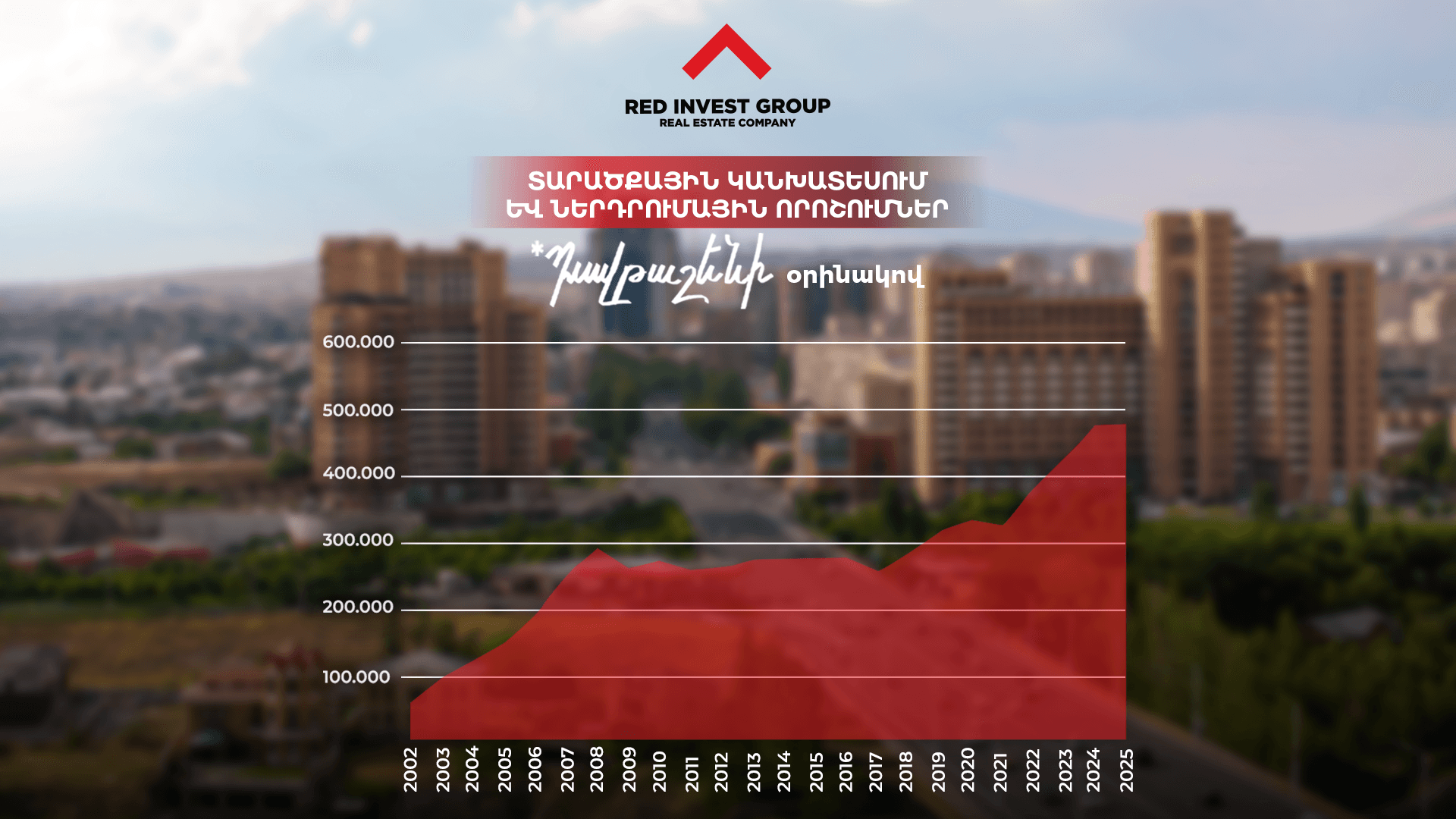
The following line graph presents the change in average price per square meter in Davtashen administrative district from 2002 to 2025, based on cadastral data. It reflects the long-term price dynamics of the market, including phases of growth and stabilization.
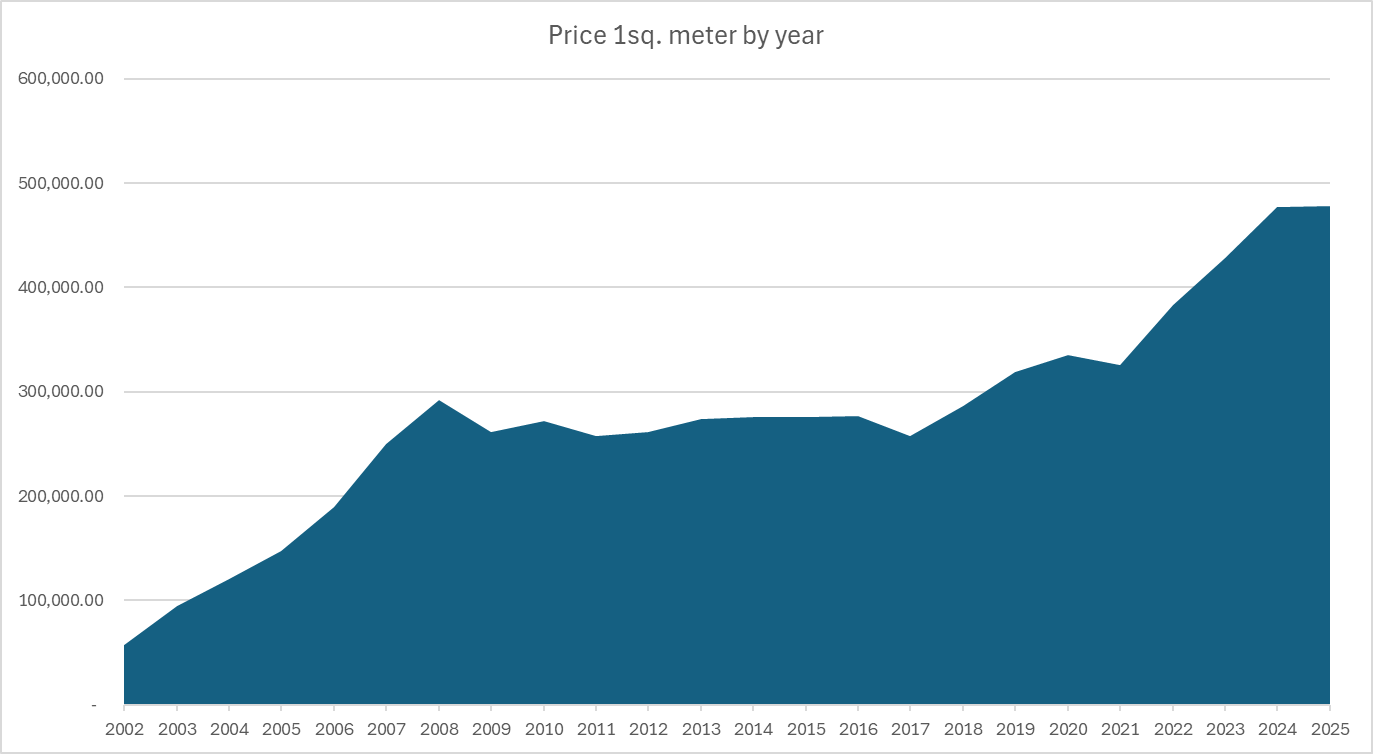
Between 2002 and 2016, the average price per square meter in Davtashen rose significantly—from around 57,000 AMD to approximately 276,800 AMD. During this phase, the market followed a path of steady development, recording a gradual increase in demand. Starting in 2017, price growth became more dynamic. That year, the average price was 257,900 AMD, and by 2024 it had reached 476,700 AMD. This shift indicates growing interest in the area, increased construction activity, and a steady rise in investment value.
These figures show that Davtashen continues to develop as an attractive investment location. The combination of official data and sectoral analysis allows for a clearer understanding of real market movements and supports well-informed investment decisions.
Such analytical approaches help identify areas that haven’t yet appeared on the active market map but possess internal growth potential. Recognizing these zones early can give developers a competitive edge—both in terms of positioning and efficient capital allocation. When a location doesn’t yet “speak,” but already “breathes,” a well-timed move can reshape not only the price curve but also the city’s map.
Today, as urban development becomes faster, more layered, and often unpredictable, such examples remind us that some areas that seem “quiet” now may become the core of an active market tomorrow. And the ability to see, assess, and steer those areas at the right moment—that’s what distinguishes a strategic decision from an ordinary one.


