 2025-10-30
Dear reader,
The summary report below presents a concise overview of the quantitative and territorial distribution of transactions related to newly constructed multi-apartment residential buildings in the real estate market during the first half of 2025. All analyses in the report pertain to the market for apartments located in newly constructed multi-apartment buildings (up to 9 years old). The information is based on official sources, ensuring a factual and accurate understanding of the topic.
Changes in the real estate market are reflected through two main indicators: the number of transactions involving apartments acquired through ownership rights and those acquired through purchase rights.
To assess actual market demand, it is more appropriate to examine purchase-right transactions, since the number of ownership-right transactions also includes apartments previously acquired through purchase rights and later formalized as ownership. Meanwhile, the number of transactions conducted directly through ownership rights is so small that it does not significantly affect the overall market picture.
Purchase-right transactions represent the current state of the market, as they reflect ongoing demand, while ownership-right transactions are mostly the result of purchase processes from previous years and therefore represent outcomes of past activity rather than current market dynamics.
Thus, our report is based on apartments acquired through purchase rights, as they more clearly reflect the present state of the market.
It is also worth noting that among newly constructed buildings registered in the market, 406 transactions were recorded in the secondary market, which accounts for 11.2% of all apartments sold through purchase rights.
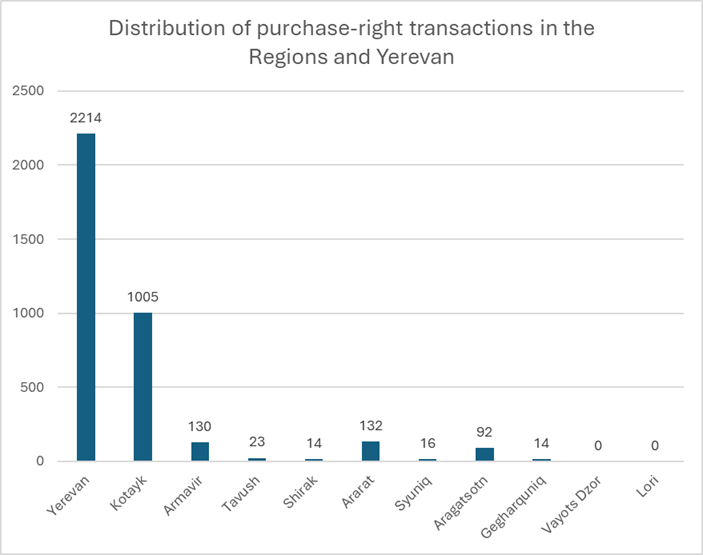
By examining the territorial distribution of apartment transactions acquired through purchase rights across the Republic of Armenia, a clear polarization becomes evident. The vast majority of purchase-right transactions are concentrated in Yerevan and the Kotayk region. Out of a total of 3,640 transactions, 3,119 occurred in these two areas, accounting for approximately 86% of the market.
This distribution indicates that the main volume of construction and investment activity is focused in the capital and its surrounding areas. Yerevan, as the economic and administrative center, and Kotayk, as a zone of active development, continue to shape the core of the primary real estate market.
A deeper analysis of purchase-right transactions within Yerevan reveals that they are somewhat more dispersed compared to direct sale transactions.
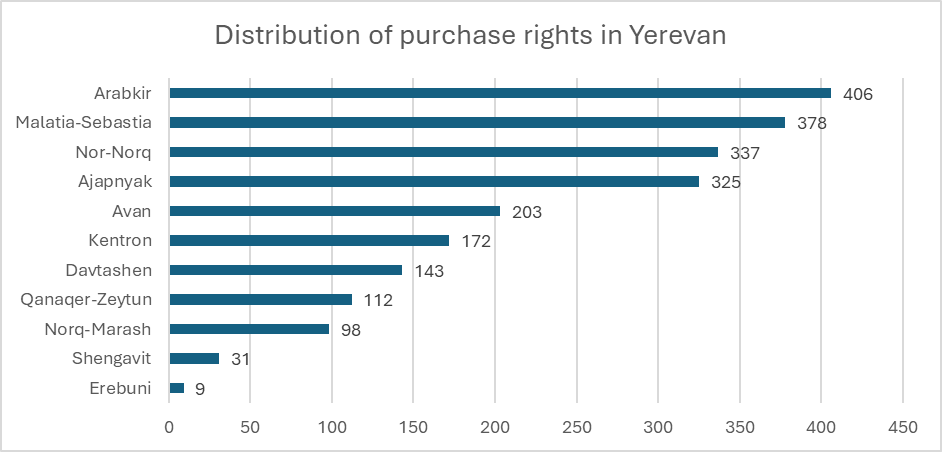
All these data indicate that market demand remains at a stable level, and the widespread negative expectations—related to a potential market decline or buyer inactivity—are not confirmed by actual indicators.
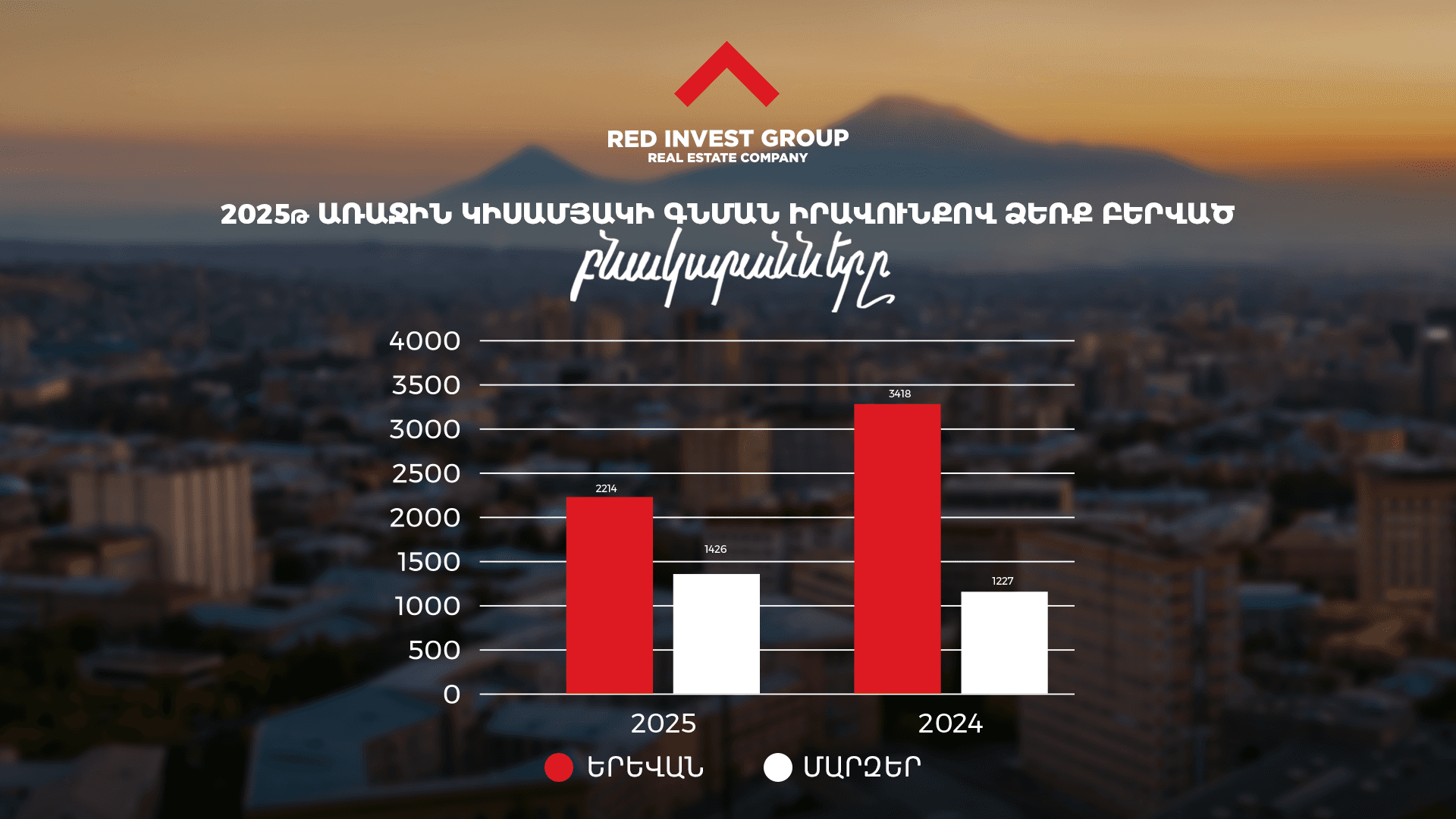
Nevertheless, to obtain a complete picture of market dynamics, it is necessary to conduct a comparative analysis between the same periods of 2025 and 2024.
Only through such an approach will it be possible to assess not only the numerical changes but also the structural trends and directions of market development.
Despite the fact that the number of purchase-right transactions has decreased—from 4,645 to 3,640, this change can be viewed as a normal market adjustment. The decline occurred in the context of the termination of the income tax refund law, which previously applied across all of Armenia but, starting in early 2025, continued to operate only in the regions.
Therefore, the decrease in purchase-right transactions should not be interpreted as a crisis signal, but rather as the market’s adaptation to a changed tax environment, especially considering that the legal amendment affected only the capital.
To better understand market demand, a detailed breakdown of the previously presented graph is provided below. It illustrates how transaction volumes have shifted between 2024 and 2025.
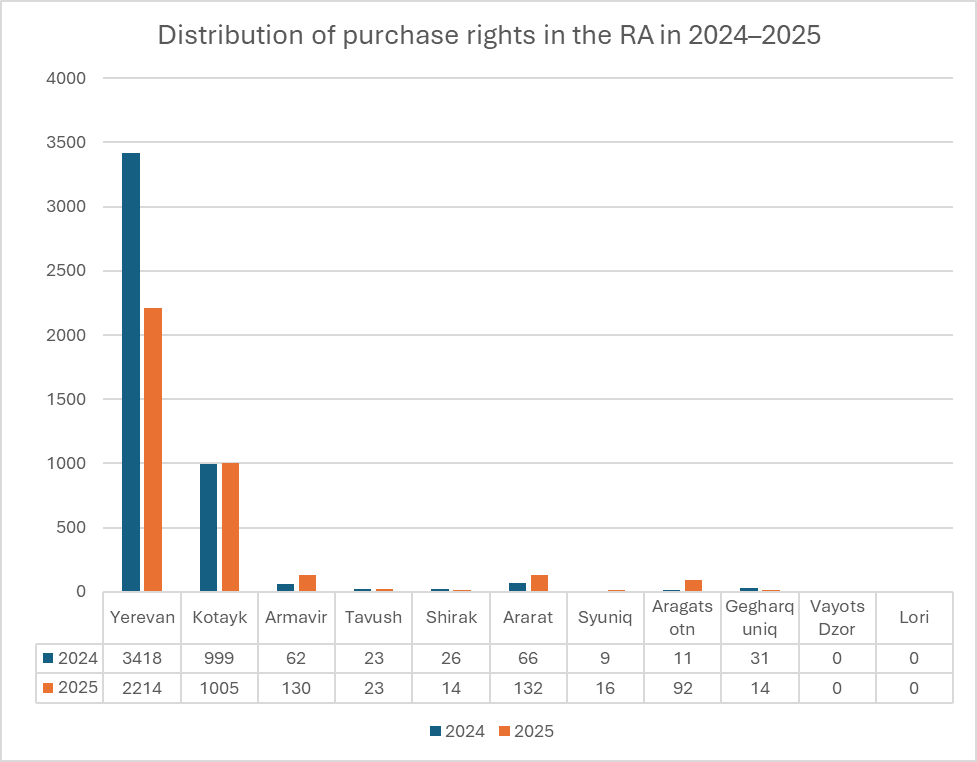
To assess the impact of changes in Yerevan’s market on the overall real estate market of Armenia, it is necessary to separately examine the number of purchase-right transactions in the capital during the same period of the current and previous year.
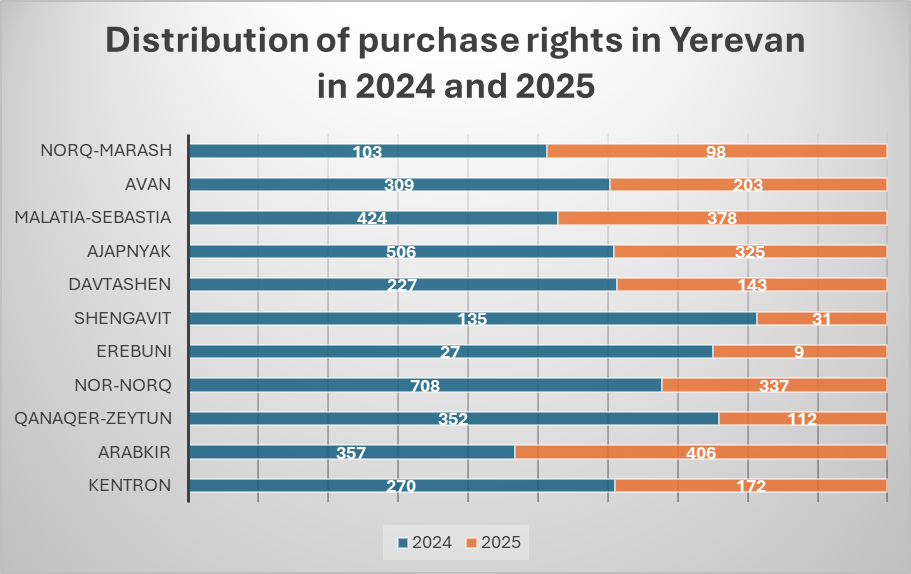
According to prevailing market sentiment, the termination of the law in the capital was perceived as a serious risk, and there were widespread predictions that the market could collapse. However, actual data show that such a scenario did not materialize. The continued activity in the market indicates that demand has withstood external pressures, and the market has maintained its structural stability.
To fully assess market demand, it is also necessary to examine the types of products that most frequently appear in transactions. Without analyzing the dominant products in the market, the picture of demand remains incomplete and may lead to incorrect conclusions.
Therefore, to present a more comprehensive view of the market’s demand structure, we have categorized apartments acquired through purchase rights in Yerevan by size groups.
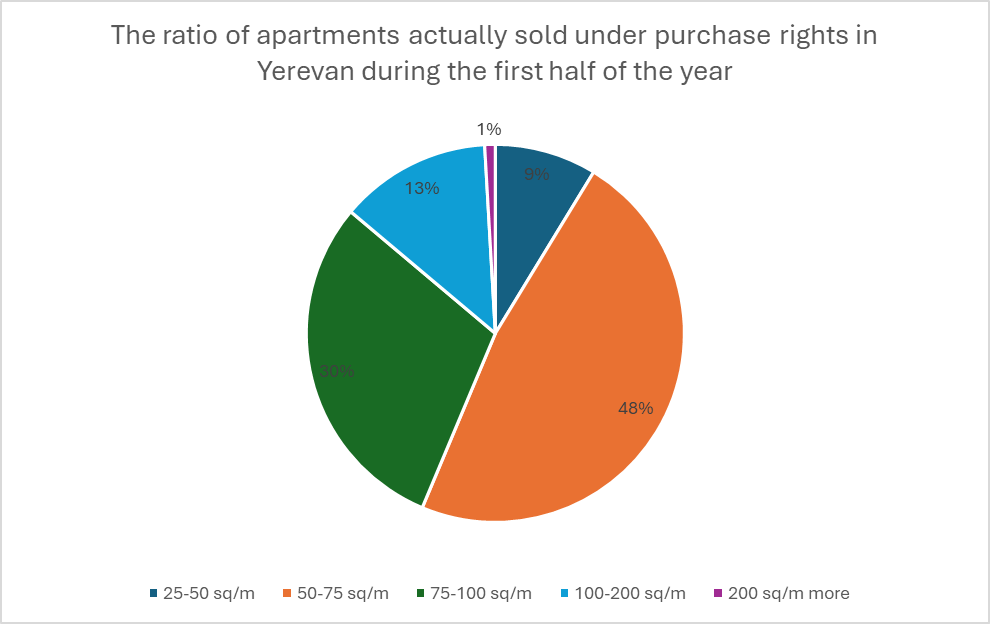
According to the analysis, nearly half of the apartments acquired through purchase rights in Yerevan (approximately 50%) fall within the 50–75 sq.m. size category. Additionally, around 30% of transactions were conducted in the 75–100 sq.m. group, indicating a stable and dominant demand for medium-sized apartments.
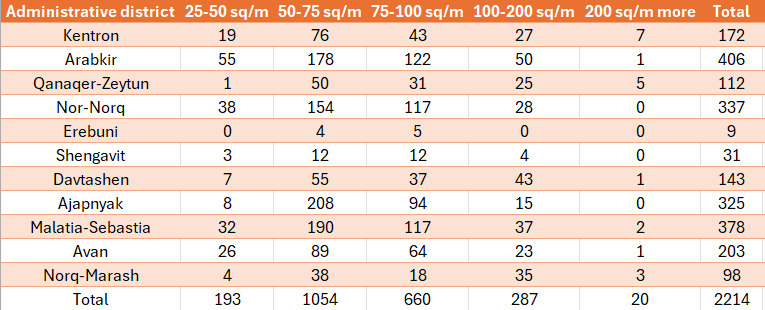
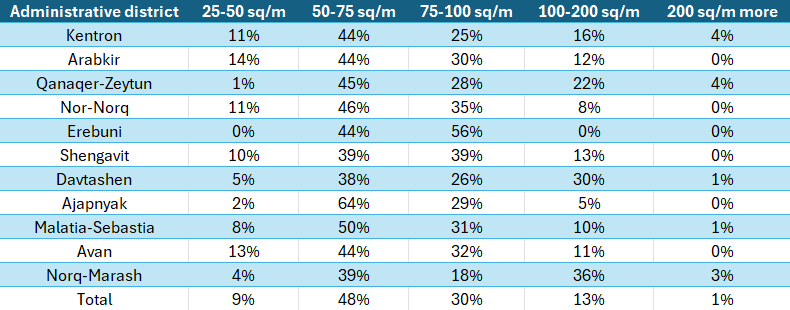
This is a tabular presentation of apartments acquired through purchase rights in Yerevan, categorized by size, number of transactions, percentage distribution, and administrative districts. The data is based on the latest publications from 2025.
Recent observations show that demand in the housing market remains steady, especially for apartments with practical sizes located in accessible administrative districts. Despite some forecasts predicting a possible decline in demand, such a trend has not materialized in practice. Buyer interest remains stable, and the structure of transactions indicates that the market is still active.
At the same time, the minor fluctuations observed in the market—caused by changes in various factors—should be viewed as a natural self-regulation mechanism rather than a systemic crisis or collapse. Such movements are typical of any developing market and correctly interpreting them is essential for accurately assessing the situation and making balanced decisions.


